
RadoNorm
Newsletter No.1
June 2021
Inside the issue
- Note from PC
- About RadoNorm
- WPs short presentations
- Events and trainings: past and future
- Latest deliverables and publications
- Researchers in a spotlight
- Engagement opportunities
Subscribe to RadoNorm Newsletter
Note from PC

Dear RadoNorm partners and followers, it is a great pleasure for me to share with you the RadoNorm first newsletter. As a start, we are sharing general information regarding the RadoNorm project in this issue as well as future prospects of the project beyond the implementation phase.
Thanks to the great commitment of our project partners, we have made great strides in implementing the project and running it smoothly for the first ten month.
I hope you enjoy reading this and upcoming newsletters. We invite you to provide your feedback concerning the newsletter and to share your ideas what you expect from it. Your comments will be most welcome.
About RadoNorm
RadoNorm project with a title “Towards effective radiation protection based on improved scientific evidence and social considerations – focus on Radon and NORM” is the biggest EC co-funded project in the area which aims to provide answers to open questions related to radon and NORM exposure of humans and the environment and to provide sound, feasible and applicable solutions for radiation risk reduction which are widely acceptable for the individuals and the public. The RadoNorm website provides many information about the project, the challenges to be addressed, its development and results, interaction and engagement possibilities. The connected RadoNorm social media with LinkedIn, Twitter and YouTube emphasize the latest news and events to fulfil the foreseen dissemination. Most important updates and results will be regularly published RadoNorm Newsletter.
WPs – where we are, what is new
The objective of WP1 is to ensure the project is conducted on time, according to the budget and directed towards the overall project objectives. This includes technical project coordination, management of financial aspects especially the project funding and legal aspects.
The aims of WP 1 are to:
- coordinate the technical activities of the project and linking together all project components,
- the overall legal, contractual, financial and administrative management,
- maintain the communication with the European Commission and manage the internal communication with each partner,
- monitor deliverables and milestones.
To meet this goal, BfS as coordinating partner has a qualified and experienced team to guarantee the competent management of the project.
WP2 aims at providing a better characterisation of exposures of humans (public and workers) and biota to radon and NORM. Acquisition of scientific knowledge, development of methods and protocols are foreseen in 8 sub-domains:
- reducing uncertainties in radon measurements,
- transport of radon in the environment,
- exposure to radon in buildings,
- methods of identification of high indoor radon levels,
- characterisation of NORM sites and associated exposure scenarios,
- transfer of NORM to plants,
- mobility of NORM in soils,
- long-term prediction modelling of NORM transfer in the environment.
To achieve these goals, WP2 relies on a multidisciplinary team of experienced researchers (physicists, modelers, statisticians, geochemists) as well as PhD and post-doctoral students.

Assessment of any dose effect relationships requires reliable dose estimation. Therefore, one of the main aims of WP3 is to support WP4 by providing data on doses, dose distributions, and their uncertainties. WP3 also aims to identify specific human subpopulations potentially more sensitive to radon exposure than the general public, and to develop a new dose concept accounting for spatial dose inhomogeneity.
Since the start of the project, WP3 had two general meetings, several task group meetings, and specific meetings with collaborating partners in WP4. In several tasks, collaboration platforms have been set up for collecting and reviewing references, while early simulation results were also obtained e.g. for describing doses and dose distributions in diseased airways.
- improve radon mitigation systems efficiency and sustainability,
- develop NORM residues/waste final treatment strategies based on preventive actions and mitigation methods with respect to existing circumstances corresponding to specific NORM involving industries, technological processes, legacy sites and environmental conditions.
To meet the main objectives, SURO as the WP 5 leader facilitates collaboration between 12 partner´s organizations from nine European countries, involving research institutes, radiation and nuclear safety authorities, public health institutes and universities. All research activities are being carried out within the five individual Tasks addressing the existing knowledge gaps in mitigation systems design and operation and remedial strategies development and implementation focused on radon and NORM exposures in dwellings and workplaces, including NORM involving industries and legacy sites.
In WP6, we study the societal aspects related to radon and NORM exposures. We focus among others on:
- methodological innovations for understanding and changing peoples’ behaviour with regard to radon and NORM
- the development and testing of effective and novel communication tool
- the involvement of the public in radon remediation through citizen science initiatives.
Over the past months, WP6 partners have conducted a thorough literature review of 142 social scientific research articles on the subject of radon and/or NORM. Particularly exploring the methodological state-of-the-art and caveats of this literature, the review serves as a catalogue of methodological aspects for research related to radon and NORM exposure situations, and provides valuable input for future research, both in and beyond the RadoNorm project.
Initial steps have also been taken with regard to the development and implementation of surveys on radon awareness, perception and behaviour in different European members states. A first survey, conducted in Belgium at the end of 2020, revealed among others how more respondents seem to believe that radon exposure can cause headaches, than there are respondents who indicated radon exposure can cause lung cancer.
Finally, over the past months we have started the setting up of a citizen science model focused on involving local communities in radon mitigation initiatives. A first article on the subject has been submitted, and the pilot phase of the citizen science model –which will be launched in autumn- is currently being designed. To be continued!

The aim of WP7 is to organise the education and training programme of RadoNorm focusing on PhD students and early career researchers (ECR). To this end WP7 will monitor and support the progress of PhD and ECR projects and contribute to their professional development by organising targeted courses and exchange visits.
During the first nine months 11 of 18 PhDs and 1 of 12 ECR were recruited. The remaining positions will be filled at a later stage.
Two PhD and ECR virtual meetings were also organised where each young researcher presented his/her project and answered questions. Such meetings will be repeated regularly in order to foster collaboration between Europe´s future radiation researchers. Two trainings courses were held already. Three more will be organised during 2021.
The focus of WP8 Communication, dissemination activities and exploitation of results is to ensure real intake of project results for the wide variety of stakeholders in two-way exchange. Therefore, the main contents, tools and channels have been developed: the basis is the internet website with related social media, different materials to be used for dissemination and communication, events and other interactions opportunities, open access to research publication and data by STOREDB platform, active stakeholder engagement and monitoring of activities. Two very important features are the News and the Events.
Events and trainings: past and future
RadoNorm will over the life of the project host as well as attend a range of events including webinars, workshops, short courses and more which aim to promote research and foster research community and stakeholder engagement.
So the projects Kick-Off meeting was held virtually on the 09-10 September 2020 and was the first opportunity for approx. 170 representing the 56 partners coming from 22 EU member states and associated countries to gather online to introduce the project and lay the foundation for future cooperation.
Since then RadoNorm attended as well as held several events e.g. hosted the online workshop “Liquid NORM – sources, impact assessment and treatment” with industry representatives and relevant authorities dealing with radioactivity in water, attended the CARST 2021 conferenceand organised two RadoNorm – PhD/ECR Days in which students shortly reported about the objectives of their work and the plan for research and held its first E&T courses.
The RadoNorm Annual Meeting is scheduled for 6-7 September 2021, where on the 7 September also RadoNorm stakeholders will be engaged.
Latest deliverables and publications
D6.1 – Collection of existing methods, databases, scales, protocols and other tools – state of the art
It is important to improve methodological qualities of the research that investigates societal aspects of radon and NORM exposure situations. In the deliverable 6.1 we performed a systematic review of scientific literature focusing on the methodological approaches that have been used so far. Our analysis of the 142 articles demonstrated some gaps in research on societal aspects especially for NORM. These results will support development of methodological guidelines for investigating affected populations and stakeholders with special attention to different socio-political and cultural environments.
D8.1- Strategy and plan for communication, dissemination and exploitation of results
The deliverable 8.1 is the first version of communication, dissemination and exploitation plan of the RadoNorm project and provides basis for both external and internal communication, dissemination activities and approach to the exploitation of results. The overall aim of this document is to identify the most efficient means and set a plan for the implementation of dissemination, exploitation and communication activities. RadoNorm’s outreach activities aim at communicating and disseminating the project results during the project lifetime and increase the impact after the end of the project.
Researchers in a spotlight
Jelena Mrdakovic Popic is a Senior Advisor (PhD) at the Norwegian Radiation and Nuclear Safety Authority (DSA). My day to day work consists of combining scientific and regulatory aspects of ionizing radiation, in particular of naturally occurring radioactive materials (NORM). This is also well-reflected in the RadoNorm project, in task 2.5. where I have the lead. The aim of this task is to gather information on existing NORM sites across Europe in order to obtain a general European overview. Furthermore, this task attempts to characterise, in more detail, exposure scenarios, including multiple hazard scenarios. It is expected that the results of this RadoNorm work will contribute to a better NORM understanding and subsequently improved regulatory control and risk communication.
Árpád Farkas PhD is a senior research fellow at Centre for Energy Research of Budapest. He previously had research positions at University of Salzburg and Brno University of Technology. He completed his PhD at ELTE University on the biological effects of the inhaled radioactive aerosols. Árpád has more than two decades of experience in modelling airway deposition and health effects of different types of inhaled particles. His work within WP3 of RadoNorm project includes numerical modelling of regional and local doses of the inhaled radionuclides in the healthy and diseased human lungs and in the rat airways. The aim of these simulations is to quantify the biological endpoints associated with radon inhalation and to provide input data for the in vitro irradiation experiments in WP4.
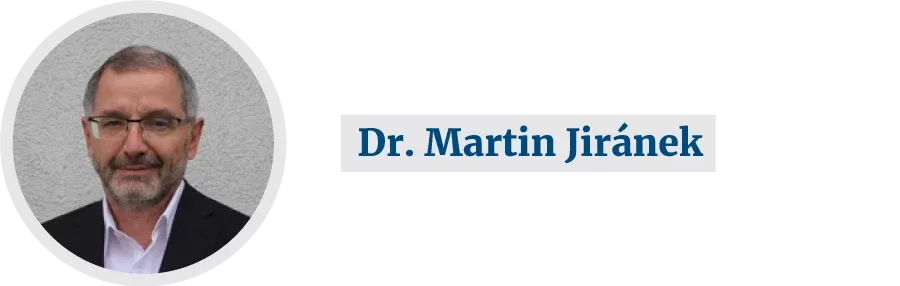
Martin Jiránek is a professor of Architectural Engineering at the Faculty of Civil Engineering of CTU in Prague. His research is focused on development of radon reduction techniques and verification of their reliability and effectiveness, numerical modelling of radon transport mechanisms, simulation of radon reduction methods behaviour, optimisation and standardisation of radon preventive and remedial measures and development of methods for determining the radon diffusion coefficient in waterproofing materials. Besides his research and teaching activities, he is also a supervisor of PhD students and is active in national and international research projects. He is the author of the Czech technical standard for designing radon protective and remedial measures and the author or co-author of more than 100 scientific and professional articles and 6 patents.
Engagement opportunities
RadoNorm established different engagement opportunities for the related and interested stakeholders. The stakeholders network groups are established for active involvement of different representatives in the project’s activities, such as pilot testing of communication tools, development of new regulatory standards, discussions on scientific findings or to be just informed about the RadoNorm results. The subscription to more information, like Newsletter issues , is organised, and the group is also invited to become the member of stakeholders groups. The RadoNorm partners are regularly informed with all news, events and calls opportunities. All developed contact data bases are managed according to the RadoNorm Privacy policy.