
RadoNorm
Newsletter No.2
December 2021
Inside the issue
- Reflection after one year
- Short news from WPs
- Events and trainings: past and future
- Latest deliverables and publications
- Researchers in a spotlight
- Engagement opportunities
Subscribe to RadoNorm Newsletter
Reflection after one year

Since the start of RadoNorm, the project and its results have been presented to the different audiences. We have been participating in many events on regular basis, here are listed just few of those to which we contributed: Pre-RICOMET 2020, RICOMET 2021, IAEA NORM 2021, HERCA Pre-workshop event 2021, CARST 2021, ConRad 2021, ERPW 2021, IRPA conference and similar. Most of the events were organised online due to COVID-19 restrictions, however the presentations were recorded, or discussions were enabled online. The information about the contributions is given at the News with link for further information if available. There were also two events organised for RadoNorm PhD/Early Career Researchers presenting the research topics and expected results. The online workshop devoted to liquid NORM was organised as part of the project’s milestone in WP5. The first annual meeting provided opportunity to present the first results from the project but also enable to discuss the needs and challenges with members and RadoNorm stakeholders.
The high interest in the RadoNorm project became also clear during the first annual project meeting, which took place 6th and 7th September 2021 as online event. The first day was dedicated to the RadoNorm General Assembly, while the second day was organised as an open event. The vivid discussions and broad involvement of researchers and stakeholders, also beyond Europe, clearly demonstrated the external impact of RadoNorm, and its activities.
Considering all the challenges we had to face and handle since project start, above all, but not exclusively the corona pandemic, it is amazing what has been achieved since project start. Leaders of work package and tasks, scientists, early career researchers, students and of course members of the administration have been highly flexible and imaginative to carry out their work and enable whatever is possible. This is also an output of RadoNorm, what should not be underestimated.
Short news from WPs
Regarding exposure to radon, methodologies and protocols to compile or acquire new data have been established for the (1) characterization of temporal and spatial uncertainty of indoor radon measurement, (2) characterization of radon aerosols in underground workplaces, (3) assessment of radon exposure in workplaces, (4) assessment of building materials as a source of indoor radon exposure, (5) improvement of methods to identify high indoor radon levels, and (6) assessment of radon and thoron outdoor concentrations and exhalation rate.
Regarding exposure to NORM, questionnaires have been developed and an e-survey in collaboration with WP5 will be soon launched to collect information on NORM exposure sites at the European level. Experimental studies and first field campaigns have been launched to better understand the influence of speciation, plant metabolites, earthworms or microorganisms on the mobility of uranium and radium in soils, their transfer to plants and to support the development of new modelling approaches to predict their reactivity in soils. Finally critical reviews of exposure pathways considered for dose assessment of public and wildlife at NORM industrial/legacy sites have begun for three selected topics: (1) the management of NORM in the context of conventional waste disposal, (2) the groundwater exposure pathways and the consideration of leaching, (3) the use of sludge from sewer depuration systems of liquids effluents as fertilizer in agriculture.

One of the specific aims of WP3 is to quantify the in vivo dose distributions in human lungs to provide realistic exposure conditions for in vitro experiments with cell cultures and organo-typic tissue models. The first output of this activity was Milestone 40 entitled “Dose distributions in human lungs”. Two computational modelling approaches were combined in order to estimate absorbed doses in different cell nuclei in case of several exposure conditions including home and uranium mine environments. Considering the spatially inhomogeneous dose distribution, both average doses in the bronchial airways and maximum doses in the deposition hot spots were estimated. Based on the simulations, recommendations have been made on how to mimic the effects of one Working Level Month exposure. The results will also be included in Deliverable 3.5 entitled “Report on results of computational microdosimetry supporting the preparation and evaluation of experiments”. Until then, further research will be performed within Task 3.5 to estimate other quantities and to characterize other exposure scenarios based on the comments and requests from WP4.
The overall objective of WP4 is to generate new knowledge related to biological effects and responses after exposure to radon and NORM that have implications for risk assessment and radiation protection of humans and the environment and, to reduce the existing uncertainties in risk assessment. To achieve this goal, we address major knowledge gaps in human health risk assessment of radon and NORM, such as interaction between radon and smoking for lung cancer, risks of radon outside of the lung, risks associated with radon exposure during childhood, risks from radon and NORM in drinking water, mechanisms of radiation action in the disease processes, and quantification of various sources of uncertainties in risk inference. Furthermore, we address the major knowledge gaps for the risk assessment of non-human biota related to the combined effects of NORM and other stressors and determining adverse outcome pathways leading to such effects. The methods used in WP4 include epidemiological studies and simulations based on epidemiological datasets, risk modelling, molecular epidemiology, experimental studies on combined effects carried out in realistic co-exposure conditions (radon and tobacco smoke/nanoparticles for human cell systems; NORM and chemicals and particulates for biota) and determining of adverse outcome pathways linking the mechanisms and effects after co-exposures.
There were three Milestones successfully achieved within WP 5 in 2021:
- Workshop “Liquid NORM – sources, impact assessment and treatment” with industry representatives and relevant authorities dealing with radioactivity in water (by GIG in February),
- Review of building materials and technologies with significant impact on indoor radon levels by applying the questionnaire about experience with the material with elevated content of natural radionuclides or including residues of NORM industries, search in the literature (by SURO in August),
- Selection of case study sites and collation of key parameters and relevant datasets for subsequent model application (by DSA in November).
Several important master questionnaires have been elaborated focusing on information and data gathering with respect to mitigation strategies, systems and methods (preventive measures, corrective actions) to control radon in workplaces and dwellings, including large-scale buildings:
- RCTS – Radon Control Technologies Survey,
- RAS – Regulatory Approaches Survey.
Separate NORM questionnaire has been prepared in close collaboration with WP2 Exposure to gather actual data and information for further working activities within the project RadoNorm.
We have also prepared a special questionnaire for collecting information about the measurement of radon and radon progenies and other relevant parameters that might be important from the point of view of dose from radon calculation and radon mitigation system efficiency evaluation.
In addition, a set of laboratory experiments, in-situ measurement campaigns in dwellings, underground workplaces and legacy sites has been commenced. Experimental and theoretical works were carried out focusing on testing of various methods developed for radon diffusion coefficient determination in radon-proof membranes. Moreover, a selection of active and passive dosimeters was made in order to prepare a large on-site inter-comparison measurement campaign in selected underground workplaces.
This WP addresses significant gaps appearing between technical R&D and people’s behavior. In particular we progress towards the following objectives:
- To develop and test an open source toolbox of qualitative and quantitative methods and scales, including a comprehensive database related to affected populations and stakeholders risk perception, views, attitudes and behavior in radon and NORM exposures situations leading to integration of the radiation protection scientific community at
EU level and a better coordination of social science and humanities research efforts; - To develop and test health communication tools, strategies and methods for behavior change in radon and NORM exposure situations to address value-action gap and improve communication campaigns results;
- To open a citizen science incubator (to set up self-sustainable citizen science initiatives) for radon prone areas and by this to motivate mitigation actions during and after the project and enable cooperation of citizens and institutional actors;
- To investigate and address risk perception, communication and governance challenges in specific exposure situations to improve practical measures in view of the effective radiation protection of people and the environment: to sensitize radon issues in the geothermal energy sector; to address apparent controversies between “radon as treatment in radon spas” and radon as threat in “health communication campaigns”; to address societal and marketing challenges related to NORM for building material.
- To provide consolidated and robust science-based policy recommendations related to societal aspects to decision makers, contributing to the existing strategic research agenda for social science and humanities for the radiation protection science community. This will lead to further integration of the radiation protection scientific community at
EU level and better coordination of research efforts.
Events and trainings: past and future

RadoNorm is currently supporting 17 PhD students and 3 early career researchers with plans to hire additional people in 2022.
Starting early 2022 an education programme for our RadoNorm PhD students and ECR (hereafter referred to as ECR) will be set up. RadoNorm ECRs shall organise and educate themselves and RadoNorm seniors as well. The ECRs will form a RadoNorm council that will organise regular educational seminars to give e.g. as a start an overview of problems and known unknowns in the field tackled by each WP of RadoNorm. The seminars will stimulate discussion and – ideally – promote collaboration amongst the young scientists.
In the year that will shortly come to an end we organised a) two events for RadoNorm PhD/Early Career Researchers presenting the research topics and expected results, b) organised 5 trainings courses (see following) and c) provided travel grants.
Currently the call for the next courses series is open. The plan of RadoNorm training courses 2022 will be published on the website end January 2022.
There is also the last 2021 call for travel grants active. Respective deadlines can be seen here.
We also want to draw already your attention to the Euratom Conferences FISA 2022 – EURADWASTE ’22 organised by the French Presidency of the Council of the EU and the European Commission will take place on Monday 30 May – Friday 3 June 2022 in Lyon, France. In addition to joint opening and closing plenary sessions, there will be many networking opportunities within dedicated parallel and poster sessions, thematic workshops, PhD/MSc and R&D awards, Nuclear Innovation prizes and Young Generation matchmaking opportunities.
The 2021 RadoNorm events are summarised below:
- RadoNorm annual meeting 6-7 September 2021 / RICOMET/RadoNorm 8 September 2021;
- RadoNorm training courses:
- Naturally occurring radionuclides in work and the natural environment – establishing the problem definition, finding sources and exposure assessment, 12 – 26 April 2021, GIG, on-line, Poland.
- The art of public opinion survey analysis: surveying the public on radon and NORM. 26 – 30 April 2021, SCK-CEN and Antwerpen University, on-line, Belgium.
- Interdisciplinary radiation research on radon – InterRad, 14 – 25 June 2021 BfS, Munich, Germany.
- NORM impact assessment toolkit: from microorganisms to human cells. 30 August to 10 September, 2021, Aveiro University and Porto University, Portugal.
- CELET: Cellular and genotoxic effects of high and low LET ionising radiation –introduction to radiation biology. 8 – 19 November, 2021, Stockholm University, Sweden.
Events in 2022 like NORM X and the RICOMET conferences will be promoted via our event calendar page. So, stay tuned for the latest information.
Latest deliverables and publications
First RadoNorm scientific paper published:
Meritxell Martell, Tanja Perko, Yevgeniya Tomkiv, Stephanie Long, Alison Dowdall, Joke Kenens, (2021), Evaluation of citizen science contributions to radon research, Journal of Environmental Radioactivity, Volume 237, ISSN 0265-931X.
Paper reports about the identified existing civil society initiatives in the field of radon and evaluation to what extent these civil society initiatives contribute to radon research and/or radiation protection from radon in order to reduce lung cancer due to radon exposure situations. Most of the current citizen science projects apply the simplest form of participation (crowdsourcing) and only one of the eight identified focuses on radon mitigation. The development of citizen science initiatives which considers not only testing but also radon mitigation, may contribute to a decrease in radon related lung cancer. The aim in RadoNorm is to launch citizen science initiatives where citizens actively reduce the levels of radon exposure in their houses. You can read the full paper on https://www.sciencedirect.com/science/article/pii/S0265931X21001570.
Researchers in a spotlight

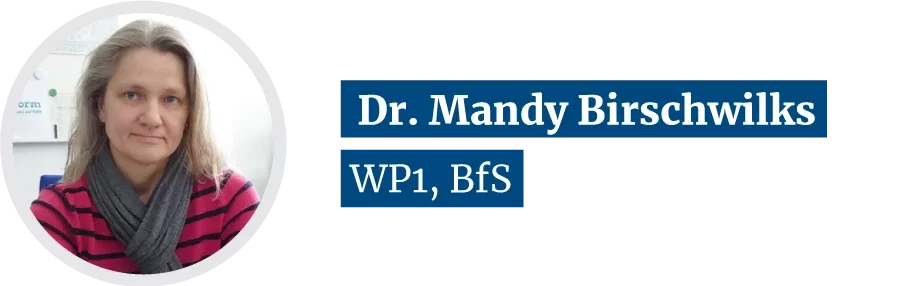
Laura Urso is scientific officer (PhD) at the German Federal Office for Radiation Protection (BfS) in the Section Radioecology. She is in charge of improving the understanding of physical, chemical and biological mechanisms underlying the transfer of radionuclides in the environment. This is also well-reflected in task 2.8 of the RadoNorm project where she has the lead. The aim of this task is to update radioecological models that deal with the transfer of NOR in situations that may increase the exposure of members of the public, a criterion that often applies to regulatory prescriptions. In particular, this task attempts to make use of knowledge gained during the project on sorption of NOR in soil, to improve the modelling of the groundwater pathway and – if necessary – to reduce the level of conservatism in the exposure assessments in the context of NORM.
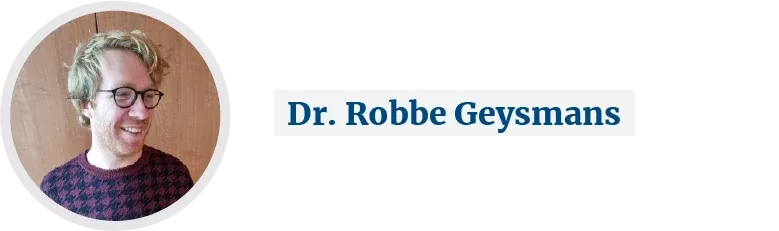
Robbe Geysmans is a sociologist working at the Belgian Nuclear Research Center SCK CEN, where he conducts research on the socio-technical aspects of ionizing radiation. In the RadoNorm project, he assists in the management of WP6 on societal aspects of radon and NORM, and is also leader of a task on addressing communication and governance challenges in specific exposure situations. This task focuses on rather exotic and unexpected places, such as radon spas, geothermal installations and building companies. However, while seemingly odd at first sight, these places offer important challenges for radon and NORM management, not in the least from a societal point of view. How for example can NORM containing byproducts be brought on the market as sustainable building products? Or how to understand the apparent controversy between radon as a health risk and radon as a spa treatment? These are the sort of questions that Robbe and many other enthusiastic RadoNorm researchers work on.
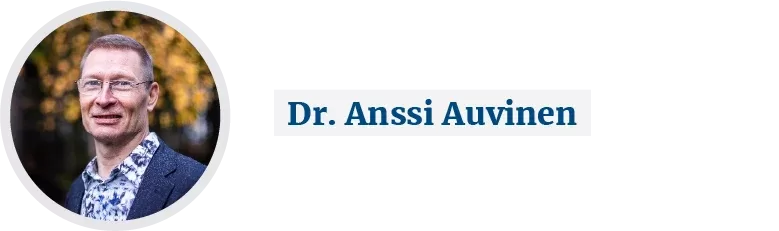
Anssi Auvinen is professor of epidemiology at Tampere University and research professor at STUK Radiation and Nuclear Safety Authority in Finland. He has been engaged in research on health effects of Chernobyl fallout, occupational radiation exposure among airline personnel, nuclear workers and medical staff. In the RadoNorm project, he is leading task 4.3 addressing risk of childhood leukemia and brain tumors from residential radon. Few studies have evaluated risks of childhood malignancies in relation to indoor radon exposure. Within RadoNorm, case-control studies will be conducted in France and Finland, and pooled analysis of these with previous studies will be performed for integrative risk assessment as a basis for risk assessment and risk management.
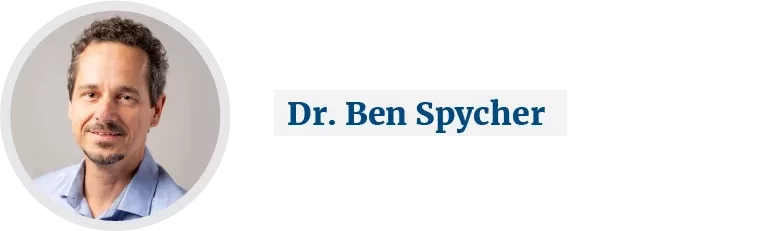
Ben Spycher is a senior researcher at the Institute of Social and Preventive Medicine of the University of Bern, Switzerland. His research focuses on the environmental risk factors of childhood cancers with an emphasis on ionizing radiation. He has led studies on childhood cancer risks and exposure to background radiation in Switzerland and has conducted a national survey on radiation exposure children involving personal dosimetry. Within RadoNorm, he is leading a pooled analyses of studies from multiple European countries on the risks for childhood leukaemia and brain tumors from exposure to domestic radon and terrestrial gamma radiation.
Engagement opportunities
The RadoNorm website provides many information about the project, the challenges to be addressed, its development and results, interaction and engagement possibilities. The linked RadoNorm social media with LinkedIn, Twitter and YouTube emphasize the latest news and events to fulfil the foreseen dissemination. We would be most happy if you would connect with us.
RadoNorm established different engagement opportunities for the related and interested stakeholders. Several stakeholder groups are established for active involvement of different representatives in the project’s activities, such as pilot testing of communication tools, development of new regulatory standards, discussions on scientific findings or to be just informed about the RadoNorm results. You are most welcome to join the RadoNorm stakeholder groups. The subscription to more information, like Newsletter issues, is available. The RadoNorm partners are regularly informed with all news, events and calls opportunities. All developed contact data bases are managed according to the RadoNorm Privacy policy.